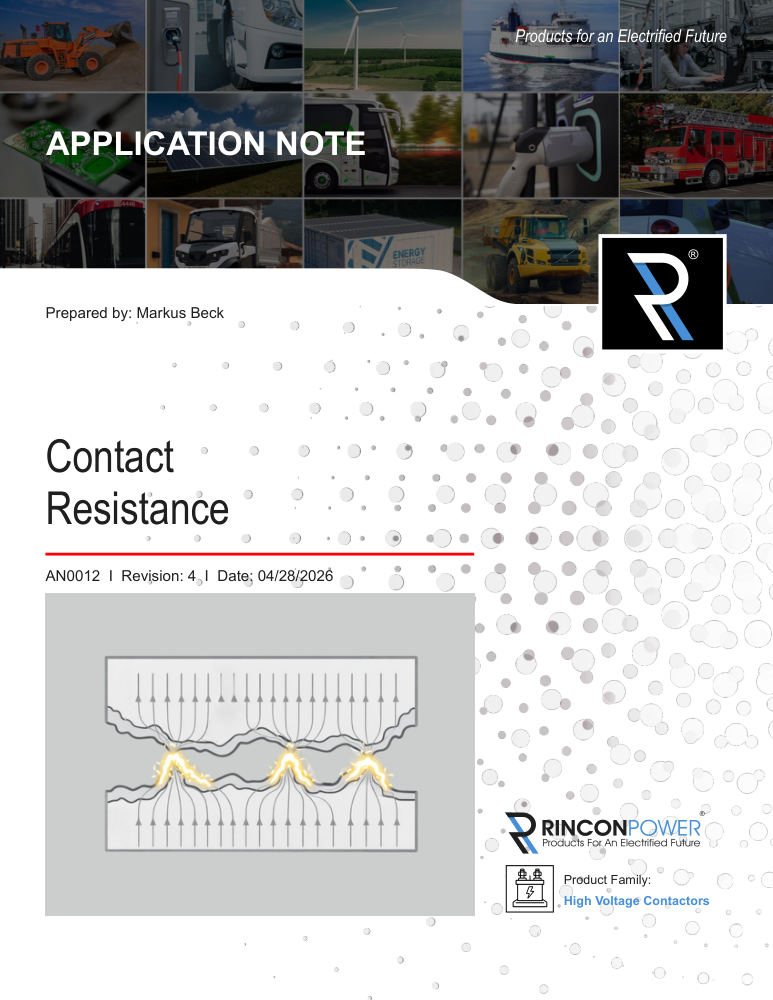
Contact resistance is a critical performance metric for high-voltage DC contactors that directly affects thermal management and system efficiency, yet it is dynamic rather than static because of the microscopic nature of the contact interface. This application note breaks resistance into its physical components, constriction, film, and spread resistance, and explains how contacts touch only at microscopic peaks called asperities, or a-spots, where higher contact force reduces constriction resistance. It also explains why Rincon Power products are hermetically sealed and gas filled to keep resistance low and stable by preventing surface oxidation over the life of the device. Finally, it details why standard low-current measurement techniques often yield misleading data and how to test in a way that reflects real-world load conditions.


